
Signs of a hidden leak
- A water bill that rises without a change in use
- The water meter's low-flow indicator moving while every fixture is off
- A warm or damp spot on a slab floor, or cracked and lifting tile
- The sound of running water inside a wall or under the floor
- Mold, musty odors, or stains on drywall and baseboards
- Low water pressure on one line
- A soggy patch in the yard between the meter and the house
Why California homes leak where they do
California's housing boom after World War II produced hundreds of thousands of slab-on-grade tract homes across Los Angeles County, Orange County, the Inland Empire and the Bay Area. In many of them, copper water lines run beneath the concrete. After decades of service, copper can develop pinhole leaks from internal wear, water chemistry or abrasion against the slab. Hot water lines often fail first, which is why a warm patch on the floor is a classic clue.
Leak Detection Near You : Choose Your City
Every city below has its own local Leak Detection page with coverage details.
Older raised-foundation homes from the 1920s and 1930s, common in Long Beach, Los Angeles, Pasadena and older Bay Area neighborhoods, usually have pipes in a crawl space. Galvanized steel corrodes from the inside and can leak at threaded joints. These leaks are easier to reach but can damage subfloor framing if they go unnoticed. In newer homes, leaks are more often at fittings, fixture connections, or irrigation lines.
Earthquakes, expansive clay soils and hard water all add stress. Hard water is common in Southern California and the Inland Empire and can contribute to pipe wear and fitting failures over time.
A quick check you can do
Turn off every fixture, appliance and irrigation system. Find the water meter and watch the small low-flow indicator (often a triangle or star) for a few minutes. If it moves, water is going somewhere. Then close the main shut-off at the house. If the meter still moves, the leak may be between the meter and the house.
How professionals locate leaks
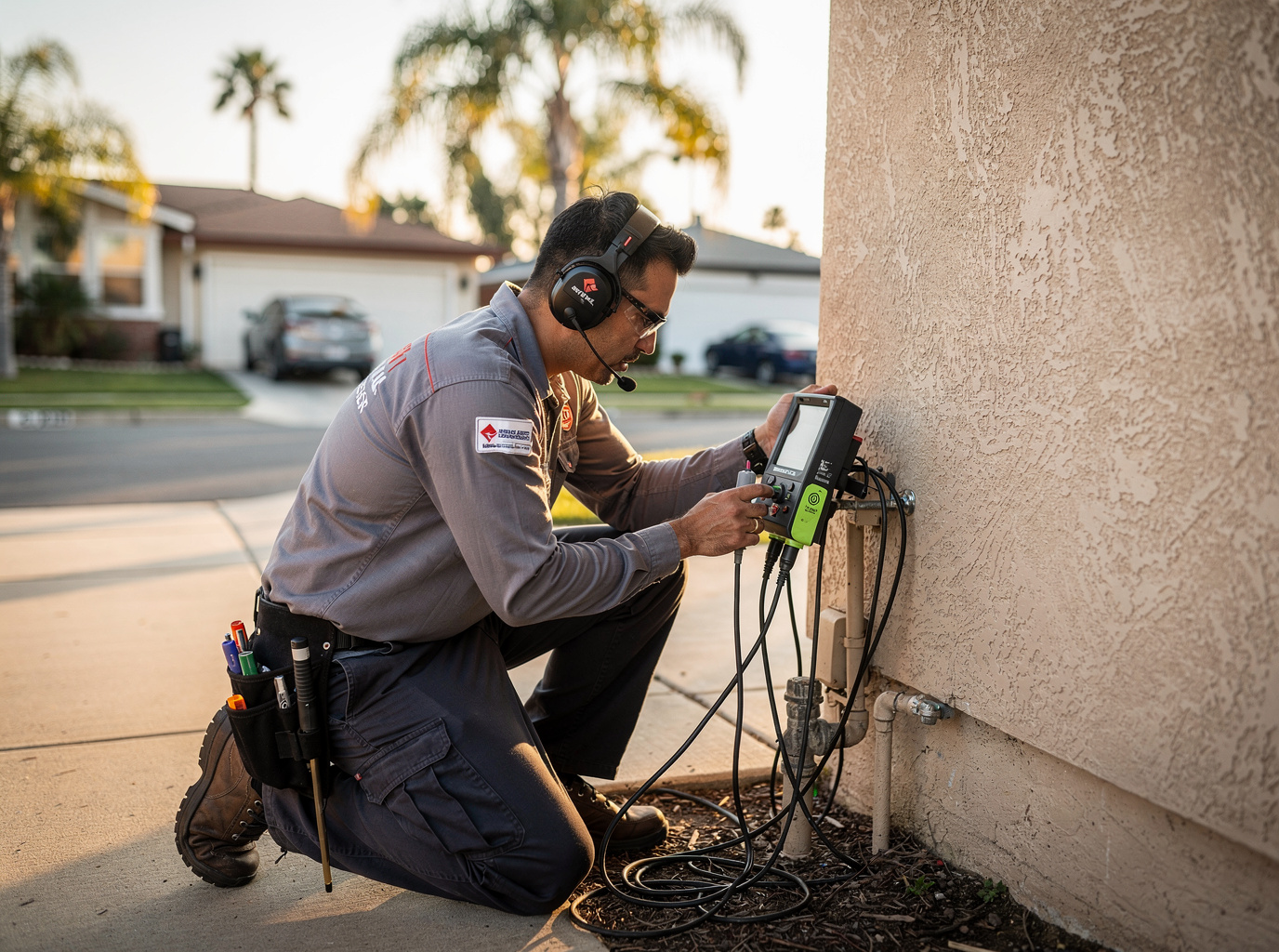
A leak detection visit usually starts by isolating parts of the system, testing hot and cold lines separately, then narrowing the location with tools such as acoustic listening equipment, pressure testing, thermal imaging, moisture meters and line tracing. The goal is to pinpoint the leak before cutting drywall or breaking concrete. Ask the contractor which methods they will use and how they will confirm the location.
After the leak is found
Options include a spot repair at the leak, rerouting the line through walls or the attic, epoxy lining in some cases, or repiping the home if leaks keep recurring. Ask the contractor to explain each option, what flooring or drywall restoration is included, and whether a permit is needed. Many cities require a permit for reroutes and repipes.
Call +1 (614) 304-3640 with your ZIP code and what you have noticed. Calls are connected to an independent local contractor, who confirms availability, visit fees and scope with you.
Leak detection by city
See Long Beach leak detection and slab leak repair, Los Angeles, Norwalk, South Gate and Pittsburg. Related: pipe repair and emergency plumbing.
Local insight
A useful assessment explains the cause, evidence and proposed scope. Ask what remains uncertain and whether further testing is needed before approving work.
Illustrative enquiry, not a customer case study
A Norwalk homeowner in a 1950s slab home calls because the hallway floor feels warm and the water bill has jumped. The meter's low-flow indicator moves with every fixture off. The independent contractor confirms availability and the visit fee and explains how the leak will be located before any concrete is opened.
Leak Detection Services We Offer
✓Household Leak Investigation
Discuss visible drips and unexplained water use.
✓Concealed Pipe Leak Detection
Ask how the location is narrowed down before opening walls or floors.
✓Possible Slab Leak Assessment
Report damp or warm floor areas without treating them as a confirmed diagnosis.
✓Leak Location and Repair Planning
Ask for findings, access requirements and alternative repair approaches.
How it works
- 1
Describe the issue
Give the city, ZIP code, symptoms and safe access details.
- 2
Check contractor availability
Confirm whether an independent contractor handles your location and this type of job.
- 3
Agree on the assessment
Ask about the visit fee, inspection method and expected arrival window.
- 4
Review the proposal
Confirm the findings, repair options, total scope and terms before authorising work.
Pricing
Independent contractors set their own prices. Request the visit or diagnostic fee and proposed repair scope before booking. This site does not quote a fixed statewide price.