
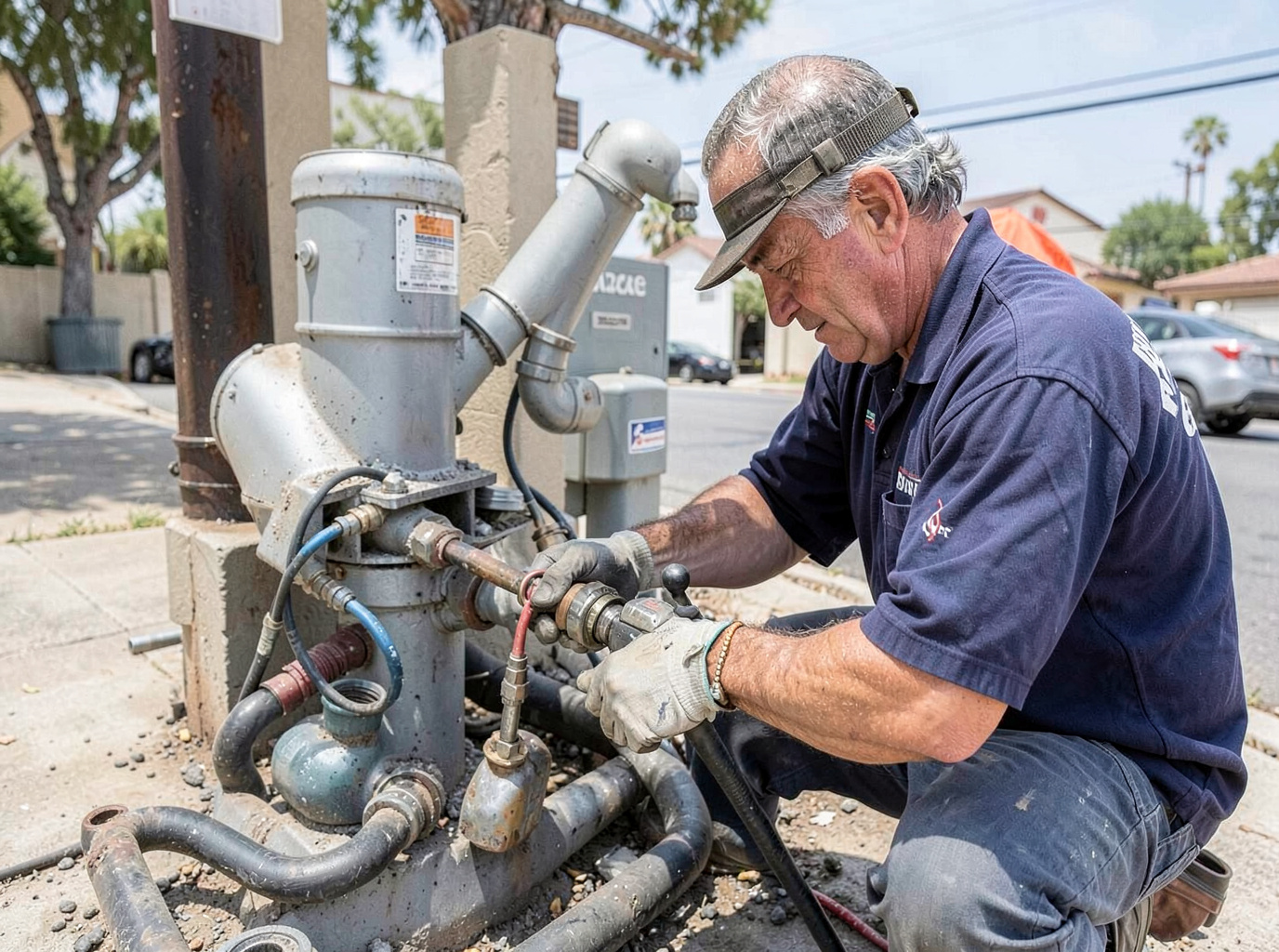
What kind of pipe do you have?
The right repair depends on the material, and in California the material usually tracks the age of the house.
- Galvanized steel (common before about 1960): found in many pre-war and early post-war homes in Los Angeles, Long Beach, South Gate and older Bay Area cities. It rusts from the inside, narrowing the pipe until pressure drops and water runs brown. Leaks often start at threaded joints.
- Copper (common from the 1950s on): used widely in post-war tract homes, often under slab foundations. Long lasting, but pinhole leaks can develop with age and water chemistry.
- CPVC and PEX (more common in recent decades): used in newer construction and repipes. PEX is flexible and resists scale, which makes it popular for reroutes.
- Polybutylene (gray plastic, installed in some homes from the late 1970s to mid 1990s): known for failing at fittings and often recommended for replacement.
Check where the pipe enters the water heater or under a sink to see what you have.
Common pipe problems
- Burst or split pipe: often a failed fitting, a corroded section or physical damage
- Pinhole leaks in copper: small leaks that may show up as a damp spot or a hissing sound
- Low pressure throughout the house: a sign of corroded galvanized pipe or a failing pressure regulator
- Rusty water: usually galvanized pipe or the water heater
- Knocking or banging (water hammer): caused by fast-closing valves or loose pipe straps
- Leaks at old shut-off valves: original valves can seize or drip when finally turned
Pipe Repair Near You : Choose Your City
Every city below has its own local Pipe Repair page with coverage details.
Spot repair or repipe?
A single leak in otherwise sound pipe usually suits a spot repair: cutting out the damaged section and replacing it. When there have been several leaks, when galvanized pipe has visibly narrowed, or when polybutylene is present, repiping the house is often considered. A repipe replaces the supply lines throughout the home, typically in PEX or copper, routed through walls and the attic. Ask the contractor what the opened walls will look like afterward, whether drywall patching is included, and whether a permit is needed. Most California cities require a permit for repiping.
Water pressure and regulators
Many California homes have a pressure reducing valve near the main shut-off. When it fails, pressure can climb high enough to stress pipes, fittings and appliance hoses. If you notice banging pipes, dripping relief valves or frequent fixture failures, ask the contractor to test the house pressure.
What to tell the contractor
Describe the leak location, pipe material if you know it, the age of the home, and whether there have been other leaks. If water is escaping, shut off the main valve. Call +1 (614) 304-3640 with your ZIP code. Calls are connected to an independent local contractor, who confirms availability, visit fees and scope with you.
Related guides
Hidden leaks: leak detection. Urgent bursts: emergency plumbing services. City guides: Long Beach pipe repair, Los Angeles pipe repair, South Gate pipe repair and the California city directory.
Local insight
A useful assessment explains the cause, evidence and proposed scope. Ask what remains uncertain and whether further testing is needed before approving work.
Illustrative enquiry, not a customer case study
A Los Angeles homeowner in a 1930s house calls because water pressure has dropped and the cold water runs brown each morning. The pipes under the sink are threaded gray steel. The independent contractor confirms availability and the visit fee and explains that the pipe condition will decide between targeted repairs and a repipe.
Pipe Repair Services We Offer
✓Visible Pipe Leak Repair Enquiry
Discuss an accessible leak or failed joint.
✓Concealed Pipe Assessment
Ask how the source will be located before opening finished surfaces.
✓Water Supply Line Repair Enquiry
Confirm which section is privately owned and how service will be restored.
✓Repair or Repipe Comparison
Ask why a wider replacement is recommended and request its scope.
How it works
- 1
Describe the issue
Give the city, ZIP code, symptoms and safe access details.
- 2
Check contractor availability
Confirm whether an independent contractor handles your location and this type of job.
- 3
Agree on the assessment
Ask about the visit fee, inspection method and expected arrival window.
- 4
Review the proposal
Confirm the findings, repair options, total scope and terms before authorising work.
Pricing
Independent contractors set their own prices. Request the visit or diagnostic fee and proposed repair scope before booking. This site does not quote a fixed statewide price.