
2026-09-04 ·
After an Earthquake in Santa Ana: Plumbing Safety and Assessment
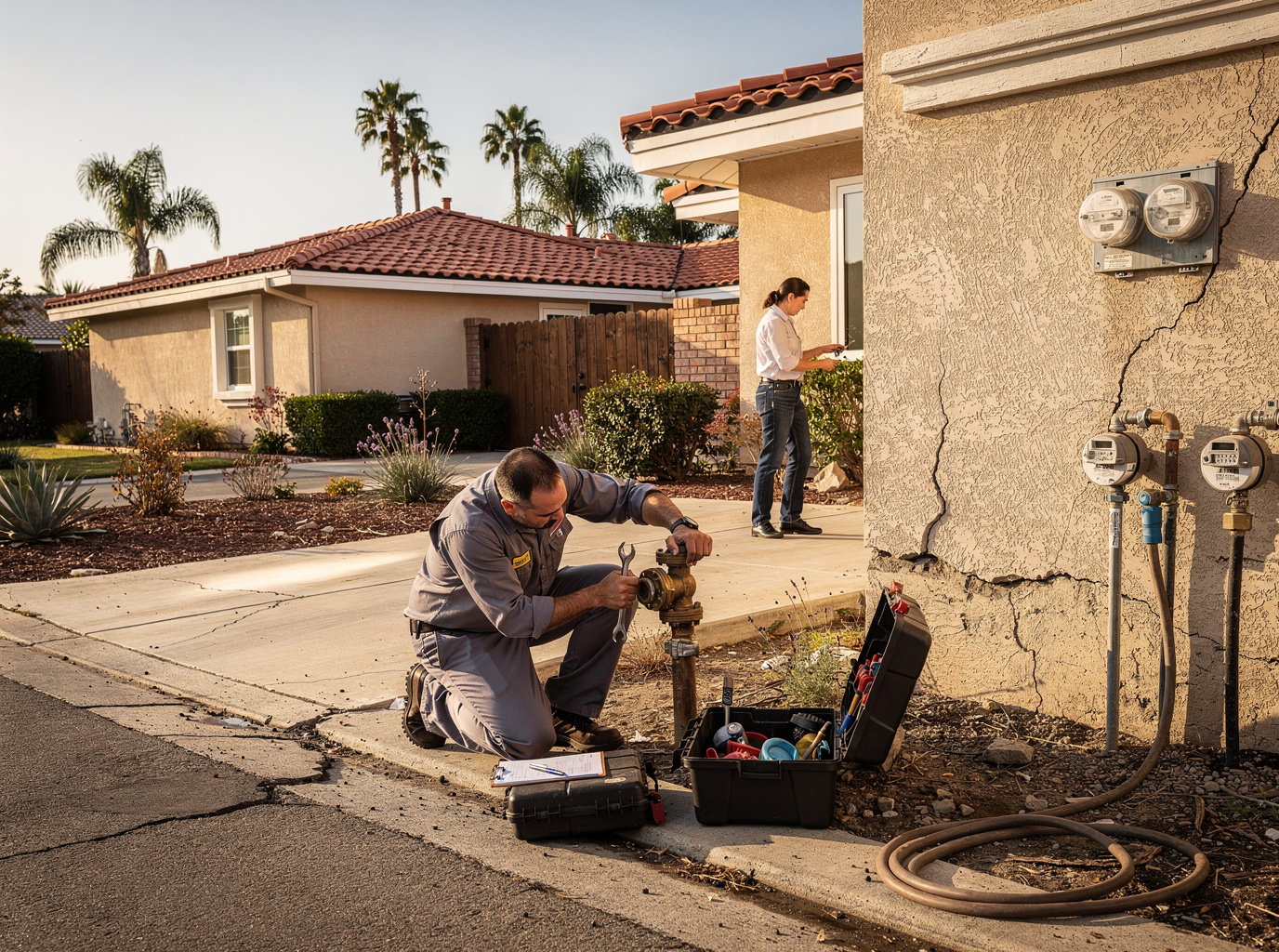
After an earthquake, building damage, gas leaks, broken water lines and electrical hazards can make a property unsafe. Follow emergency and utility instructions first. Arrange a plumbing assessment only when access is safe; a plumbing enquiry is not an emergency-response service.
Prioritize emergency instructions
Stay out of damaged buildings until the responsible authorities say they are safe. Keep away from damaged or fallen power lines. If gas leakage is suspected, leave the affected area and contact the gas utility or emergency services from a safe place. Do not attempt to relight appliances or restore utility service yourself.
Record symptoms only when safe
From a safe location, note visible water escape, loss of pressure, damaged fixtures or an appliance connection that appears displaced. An earthquake does not prove every pipe has failed. Do not enter standing water or unstable spaces to inspect plumbing.
Ask for a defined assessment
Explain the timing of the symptoms and any utility instructions already received. Ask the contractor which visible damage and systems will be assessed, what the diagnostic visit costs and what findings would support a repair. Building, electrical and gas work may need separate qualified help.
Before services are restored or repairs approved
Follow utility and local authority directions on restoring service. Confirm the written plumbing scope, required permits or inspections, access limits and restoration work. Do not assume a plumbing contractor can certify an entire damaged building as safe.
Related plumbing guides
Browse California city guides. Call +1 (380) 292-6762 with your city, ZIP code and symptoms to check independent contractor availability. Confirm fees, scheduling and the written work scope directly with the contractor.
Official resource and review
CDC after-earthquake safety guidance: https://www.cdc.gov/earthquakes/safety/stay-safe-after-an-earthquake.html
Content reviewed October 7, 2026. This homeowner guide provides general enquiry information; it is not an on-site diagnosis.