
2026-09-04 ·
Possible Slab Leak in Santa Ana: Signs and Diagnosis Questions
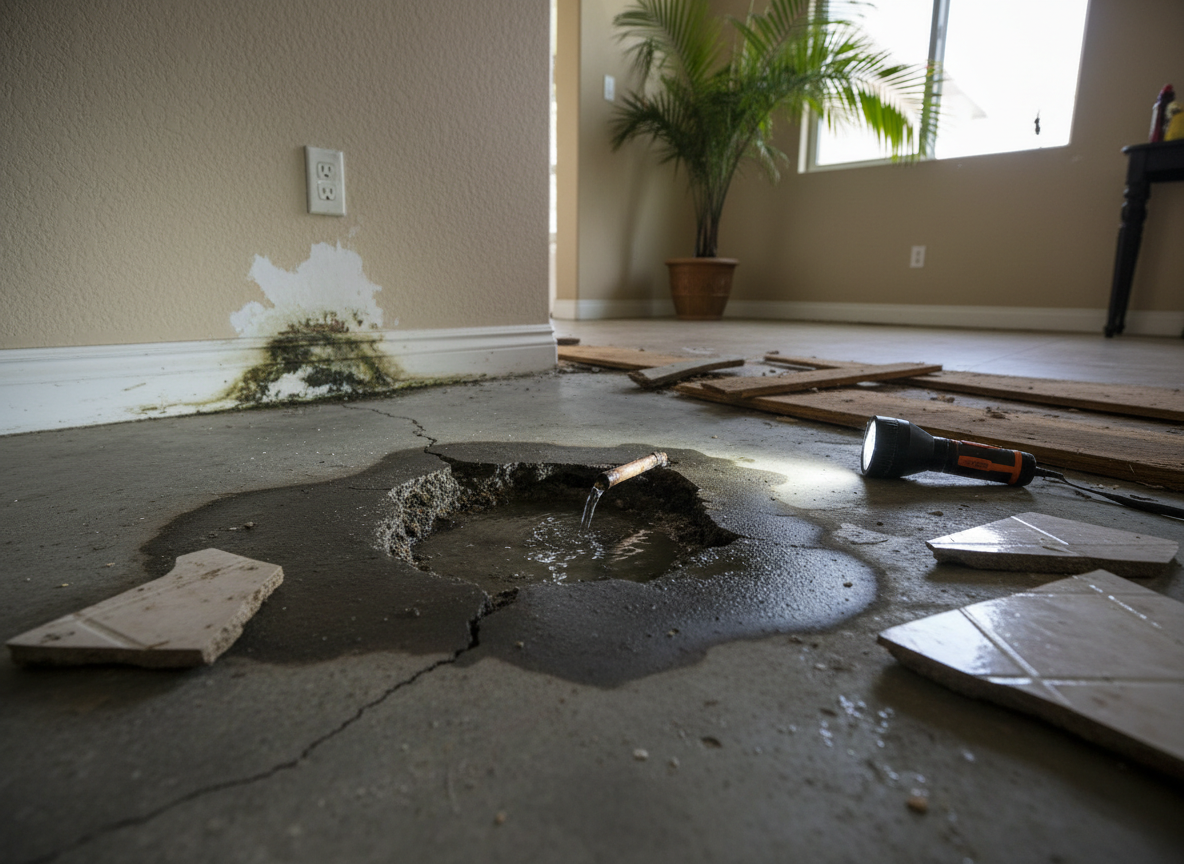
A suspected slab leak is a possible leak in plumbing associated with the area beneath a concrete slab. Damp flooring, running-water sounds or unexplained water use can justify investigation, but none proves the location or cause by itself.
What observations are useful?
Note when a damp area appears, any change in water use and whether a fixture, appliance or irrigation line has a visible leak. Record the observations without treating them as a diagnosis. A toilet that keeps refilling or an appliance connection can also need investigation.
Can a water meter check locate the leak?
EPA WaterSense describes comparing a meter reading during a period when no water is being used as a household leak check. It can indicate unexplained use, but does not locate a leak beneath a slab. If you are unsure about safe access or how the meter is read, ask the utility or contractor for guidance.
What should leak detection establish?
Ask how the contractor will narrow down the source, whether the suspected leak concerns a supply or drain line, and what findings support the diagnosis. Confirm the detection charge and any limits of the method. Request an explanation before exploratory openings are authorized.
Compare the proposed repair scope
A focused repair, reroute or wider replacement may involve different access and restoration work. Ask why the proposed option suits the findings, who handles permits and whether floor, wall or finish restoration is included. A damp spot alone does not justify approving a full repipe.
Related plumbing guides
Browse California city guides. Call +1 (614) 304-3640 with your city, ZIP code and symptoms to check independent contractor availability. Confirm fees, scheduling and the written work scope directly with the contractor.
Official resource and review
EPA WaterSense household leak checks: https://www.epa.gov/watersense/fix-leak-week
Content reviewed October 7, 2026. This homeowner guide provides general enquiry information; it is not an on-site diagnosis.